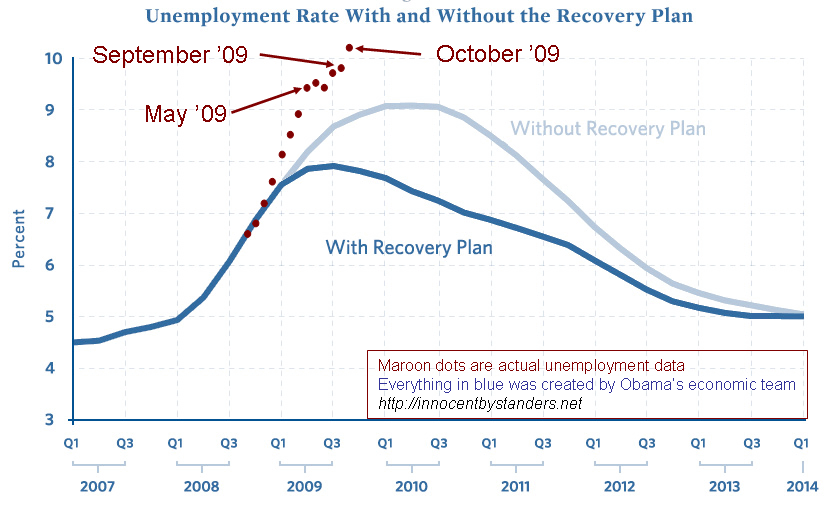
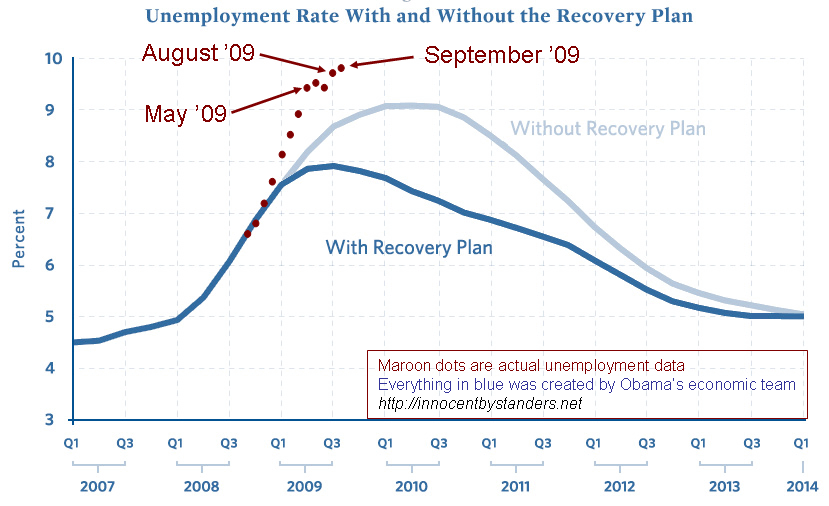
The problem in our economy is not that we are “producing too many goods,” or that “people cannot buy back what is produced” because they are not paid enough, or that government has not flooded the economy with enough new money. No, the problem is that much of the structure of production has been geared toward generating projects that cannot be sustained.Keynesians would have you believe that the problem with our economy is that there are too many goods and not enough buyers, and that with a large enough stimulus we could take up this economic slack, and kickstart the economy back to life.
The only way that the economy truly can recover is for us to permit these malinvestments either to be liquidated or be directed toward other, sustainable lines of production. Instead, the government tries to throw new money at us and claim that we just are not spending enough.
That’s a prescription for disaster.
The problem is that economic slack, or 'underconsumption,' does not cause recessions, but is rather a symptom of a malinvested economy. The problem is not that people are not buying the fruits of production, but rather that production is making things people don't want.
By 'stimulating' the economy, we merely put off necessary shifts in production. We do not allow unproductive firms to fail and be liquidated, and we do not allow successful firms to use that excess capital to rise up.
Economic recessions are a sign of changing times. We can fight against them, but doing so is as useful as trying to stop the tide from coming in. Instead, we must learn to flow with recessions, to allow capital to move from one industry to another, freely and quickly, so that we can reorganize our economy quicker, and get back to business faster.



 Posts
Posts

